
Employers Liability Insurance
Employers liability is the part of a workers' compensation policy that protects a business against employee lawsuits.

What is Employers Liability Insurance?
Employers Liability Coverage Explained
Liability and Workers Comp Insurance
Workers' compensation and employers liability insurance make up the two components of the same insurance policy in most states. Both coverages are typically provided within one policy and commonly referred to as workers' compensation jointly. Only monopolistic states exclude employers liability from a standard policy.
Employers Liability Insurance is commonly referred to as Stop Gap Coverage.
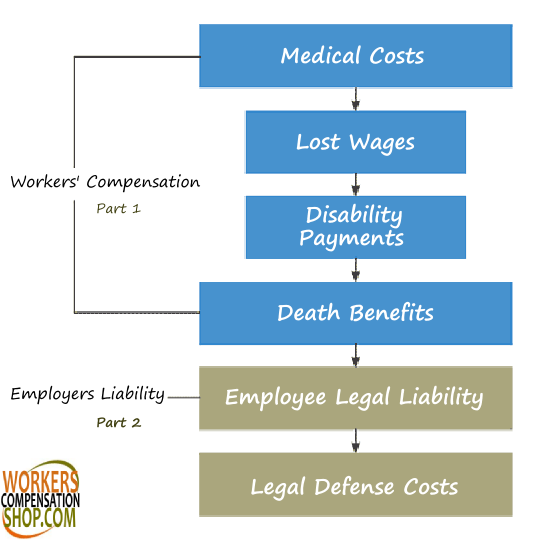
Workers compensation coverage is Part 1 of a standard policy and it covers the medical and indemnity costs associated with a claim or injury. There is no limit to the dollar amount of coverage provided for this portion of the policy. Coverage under workers' compensation includes:
- Medical costs associated with the claim
- Wage replacement payments to the employee
- Disability payments to injured workers
- Death benefit payments to families
Separate from the workers' comp component, employers liability insurance provides legal protection for the business. Employers liability covers the cost of lawsuits involving employees who are injured at work or suffer an occupational illness.
These lawsuits are often filed by employees, family relatives, and even other 3rd parties. They are typically based on negligence. Employers liability does not replace Employment Practices Liability Insurance. EPLI is a much different type of insurance. EPLI cover claims such as discrimination or harassment.Think of employers liability coverage as similar to your general liability coverage. While general liability covers a business from 3rd party claims such as customer injuries or negligence, it does not provide coverage for employee-related negligence. Employers liability fills the gap by responding to legal claims filed by injured workers.
General liability and workers' compensation insurance are the two most common types of small business insurance.
What Does Employers Liability Cover?
If an employee files a suit against a covered business, employers liability can cover the following costs up to the limits of coverage:
- Legal defense costs
- Judgments and damages awarded
- Settlement offers
- Court-related expenses
What is Employers Liability in Workers Compensation?
Employers liability is Part 2 of most workers' comp policies. It's often referred to as Stop Gap Liability Insurance because it fills in the gap between paying for an injury and defending a business from a lawsuit.
- Employers Liability coverage not included in all monopolistic states.
- All NCCI and other states' coverage includes Employers Liability Insurance.
Do I Need Employers Liability Coverage?
Yes. All business owners should want employers liability insurance. It is included on most policies because it is legally required in most states. Each state sets their own minimum employers liability limits. Workers' compensation and employers liability will typically respond to an employee-related claim unless the policy specifically excludes coverage for the event type. Here are the most common causes of employers liability lawsuits:
Loss of Consortium
Third Party Over Actions
Imagine an employee becomes injured while using a piece of equipment for a job and sustains a serious injury. While collecting workers' compensation benefits, the employee files a lawsuit against the manufacturer of the equipment. The manufacturer, in turn, sues your business for contributory negligence for something such as not maintaining the equipment properly.
Consequential Injuries
Injured Workers Rejects Workers Compensation
Dual Capacity Claims
These claims are specific to manufactures and generally happen when the employer is also the manufacturer of the product that caused the employee injury.
Employer liability insurance does contain certain policy exclusions and will not provide coverage for some types of employee claims. Some of these policy exclusions include:
- Intentional injuries
- Psychological injuries
- Claims caused by injuries outside of the United States or Canada
- Injuries to workers who are illegally employed
- Individuals covered under federal laws
Employers Liability Limits
Employers liability limits are defined within each insurance policy. Business owners may choose to increase the limits for coverage. Each state sets the minimum required coverage limits for their state. Legal statutory liability limits in most states are:
- $100,000 per occurrence for bodily injuries
- $100,000 per employee for bodily injury be occupational disease
- $500,000 policy limit for bodily injuries by disease
Workers' compensation statutory limits actually refer to the minimum state required coverage limits for Part 2 of the policy, employers liability.
Insurance companies offer easy options to increase these limits with options such as $500k/$500k/$500k or $1mil/$1mil/$1mil. Increasing employers liability limits typically costs business owners an additional 2%-3% of premium. Employers liability limits can often be increases to a maximum of $5 million for each part of coverage. An Umbrella policy may also provide additional coverage over employers liability insurance.

Workers' compensation coverage in monopolistic states does not provide coverage for employers liability insurance. Employers who operate in these states should consider buying employers liability coverage under their general liability policy. This coverage is also known as Stop-Gap coverage and can typically be added to general liability coverage by endorsement.
There are four monopolistic states that operate their own workers' compensation funds:
- Ohio
- North Dakota
- Washington
- Wyoming
How Does Workers' Compensation Work?
- What is Workers' Compensation?
- How Much is Workers Comp?
- Experience Modifiers & EMR Ratings
- Workers' Comp Class Codes
- 1099 vs W-2 Employee
- Workers Compensation Basics
- Employers Liability Insurance
- Workers' Compensation FAQ's
- Multi-State Insurance
- Workers' Compensation Laws
- State Insurance Fund
- Workers' Comp Claims
- Workers Compensation Benefits
- Managing Workers Comp Audits
- Workers' Comp Exemptions
- Ghost Policy

Workers Compensation
- Can owners and officers exclude themselves from workers' comp coverage?
- What is employers liability insurance?
- What is a workers' comp ghost policy?
- 10 good work comp questions to ask that may save money?
- How many workers comp insurers do you work with?
- I need a state workers compensation form?
- More Workers Comp Questions and Answers?
How do I get started?
- Business details, locations, FEIN or SSN
- Estimated annual payroll and job duties- class codes
- Claims info or loss history- if applicable
- Experience Modification Rate- if applicable

Save 30% on work comp for select businesses

Employers Liability
Insurance Definition
Insurance Definition
Employers liability is represented under Part 2 of a standard workers' compensation insurance policy. It provides legal coverage to an insured's business for employee-related liability for bodily injury or disease. This includes legal defense costs abd employee legal liability.
Workers Compensation and Employers Liability Insurance

Workers' comp coverage protects employees when injured. It makes good financial sense for both parties.
- Loss of income for employees unable to perform job duties
- Medical expenses for employees injured on the job
- Retraining expenses for employees unable to return
- Permanent injury or disability for lasting injuries
- Survivor benefits if employees are killed on the job
Coverage does not protect employers from everything. Sometimes employees and employers can be negligent.

- Injuries resulting from a violation of the law
- Incidents resulting from employees' use fo drugs or alcohol
- Injuries that did not occur in connection with the job
- Clear company policy violations
- Injuries that did not occur in connection with the job
Employers Liability Insurance Quotes Online
- National workers' comp specialists
- Licensed throughout the United States
- Programs for standard and tough class codes
- Pay As You Go insurance plans
- Strong relationship with underwriters
- More insurance markets to shop coverage
California DBA: I-Shop Online Insurance Agency.


